「Matrix Audio」 SI-1 Audio Grade Network Isolator Reviewed By Monkey Yu
·Review Basic Information
·Author: Monkey Yu (also known as Yu Mengqi)
Monkey Yu (also known as Yu Mengqi) has carved out a unique position in the field of audio review in China, thanks to his deep understanding of audio technology, genuine passion for music culture, and his distinctive hands-on style paired with a balanced perspective. His talkshow not only provides reliable equipment insights for audiophiles, but also opens a window to music appreciation and lifestyle aesthetics for general listeners. As the host, Mr. Yu's personal journey from "tinkering with gear" to "returning to the music" reflects a common path for many enthusiasts, making the show's content more resonant and valuable as a reference.
·Original URL: https://mp.weixin.qq.com/s/TS5LcacVoQ4xfSAmdV8Qgw
Review equipment: 「Matrix Audio」 SI-1 Audio Grade Network Isolator
The text is as follows:
Listening local music or stream audio, there's always a place for it.
It's quite interesting to say that, since I had this hobby, I've always been in the most "trendy" part of this industry. Looking back now, I'm sure I've been influenced by the market to some extent. After all, where more people are tinkering, where the hotspots are, and where discussions are lively, it's easier to be influenced and head in that direction. But thinking carefully about the choices I've made in recent years, I've made quite a few, and yet these things have become the most "trendy" parts again. In 2018, I sold all my CDs and CD transports and joined the vinyl camp. On the digital side, I deeply moved by ROON. My system became vinyl + streaming. As for the revival of vinyl, there's no need to say much. Whether it's record labels releasing all sorts of vinyl, high-end exquisite reissue series emerging endlessly, or major equipment manufacturers constantly launching more advanced and varied turntables, tonearms, cartridges, and phono stages, it all seems thriving and continuing its revival.
*The following text is presented for your convenience:
SI-1 Audio Grade Network Isolator, abbreviated as SI-1
SS-1 Pro Audio Grade Network Switch, abbreviated as SS-1 Pro
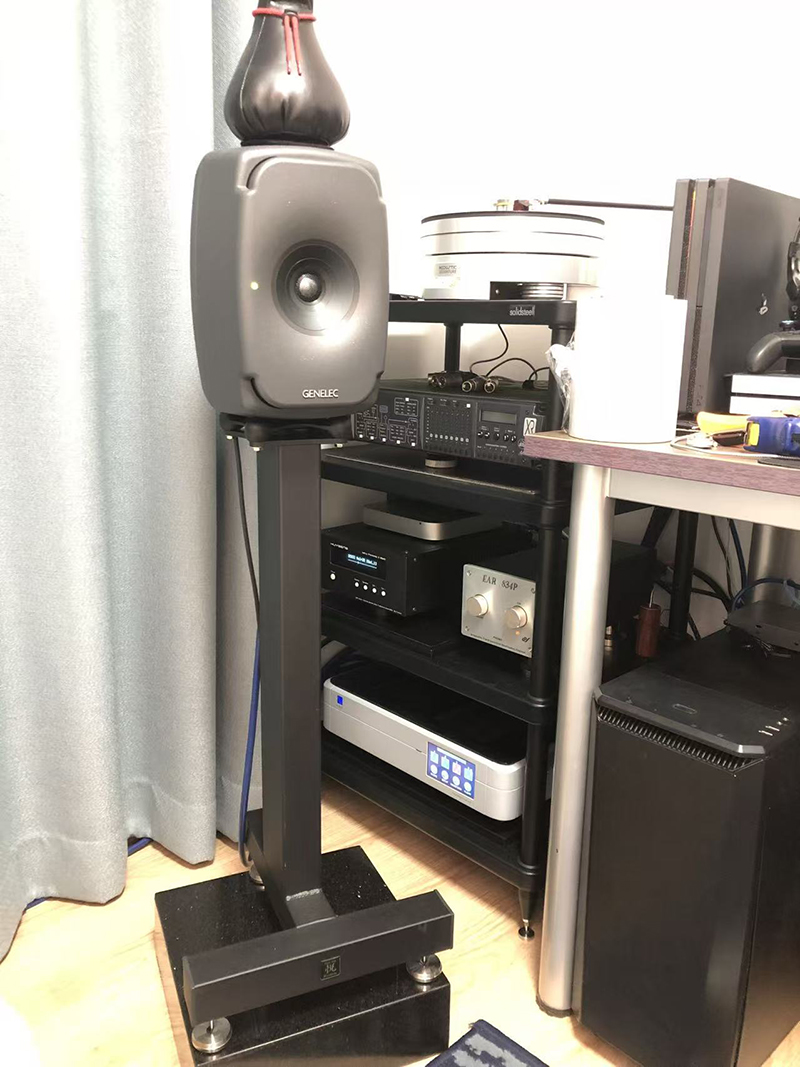
My first vinyl+ROON setup back in the day, with the Mac Mini above the preamp as the core. Looking at it now, with all that fumac and "rat" stuff, how brave I was back then...
On the other hand, streaming has become the absolute mainstream of digital music today. CDs, which I "abandoned" back then, now seem to be the absolute underdog, with new equipment becoming few and far between. Although old-school audiophiles still relish the sound of CDs, thinking it's the only answer, the market and manufacturers have obviously put more effort into the "non-physical" side, whether it's files or streaming. But the more mainstream one is, of course, streaming. Talking about listening to music files, that was actually popular a long time ago, roughly from 2010 to 2016. I played with desktop headphone systems for about 6 years and was a PC Hi-Fi user back then. So, I've often expressed in my talkshows that today's streaming Hi-Fi seems to me like a repeat cycle of the PC Hi-Fi era.
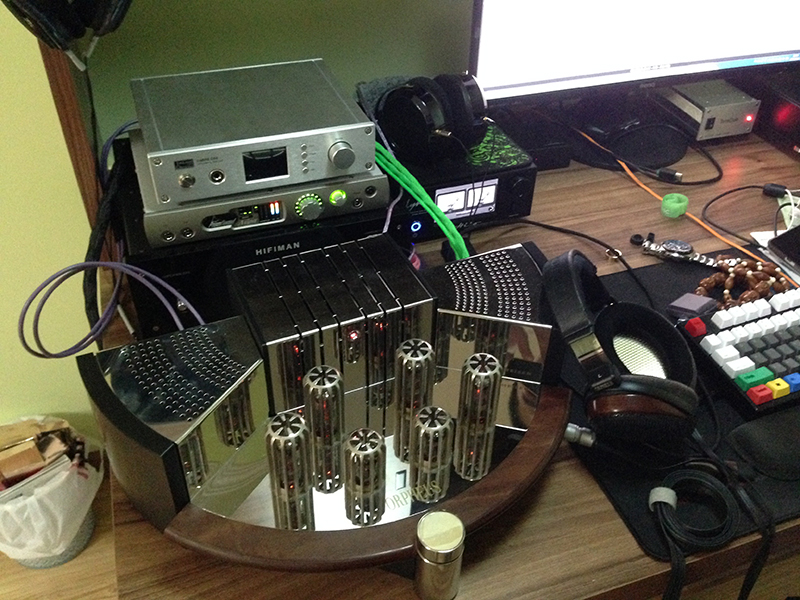
Back in the days of PC Hi-Fi... Allow me to show off by borrowing a friend's equipment.
At that time, the standard for whether a DAC was "trendy" or not was whether they had a USB port. Later, people started researching the quality of the USB port, leading to digital interfaces. Then, people found the signal from the computer was too "dirty," so various USB isolation devices emerged. And on the computer side, there were also things like "audio dedicated" PCs, RAM filter, SATA filter, etc., and other things that I now think only an idiot would buy. (yes, I bought them all).
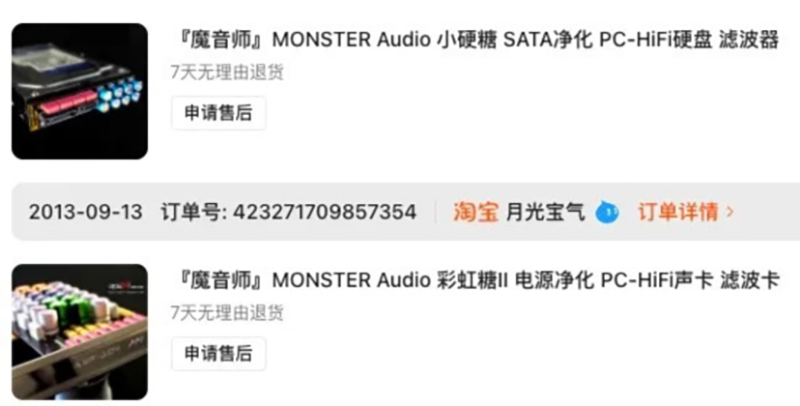
Even more outrageous is that he's still selling this stuff more than ten years later...
It's incredibly similar to today's streaming Hi-Fi. Whether a DAC is "trendy" now depends on if it has a network port. People started researching the quality of the network port, so network bridges emerged. Then, people found the network signal was too "dirty," leading to optical isolation, audiophile switches, researching optical module and fiber combinations, audio-grade network cables, and other things that I think only an idiot would buy (yes, I've messed with all of that, too). So, after mocking and self-deprecating, are these things actually useful? Honestly, yes. And often, it's a cumulative effect where small changes add up to a qualitative change. As someone who often says "there's not much difference", I think each individual thing might not make a huge difference. But if you were to remove them all one day, there would definitely be a big difference, and you couldn't go back... It's just that many things, years later, have become a kind of "standard" or must-have for audio equipment. Things people used to rave about, like asynchronous USB, XMOS interfaces, are now almost standard features on nearly every DAC's USB port. And today, I want to share this thing, which I think will also become a standard in the future.
Introduction to SI-1
Product positioning
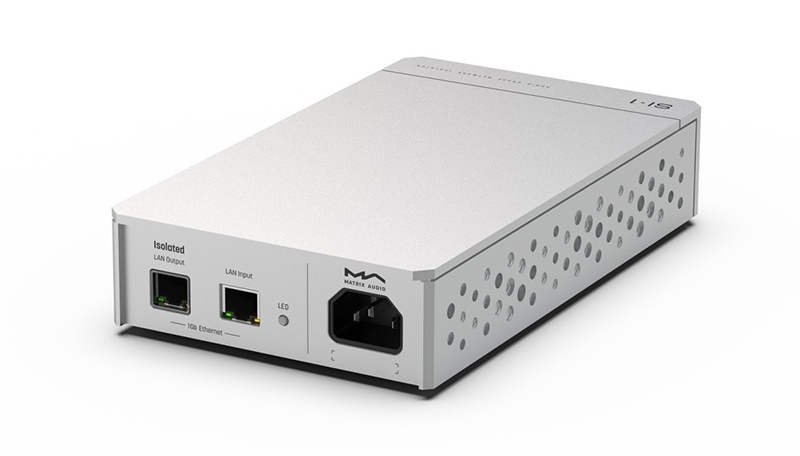
Alright, enough random talk. Let's get to the point. Recently, there's a new gear in the digital part of my system, which is the reason for all that rambling. 「Matrix Audio」has released a new network isolation device: (The only time its full name appears here:) SI-1 Audio Grade Network Isolator. Overall, it's like a switch with only one input and one output port, so you could also call it a "dual-port switch." Its function is to "clean" the network signal.
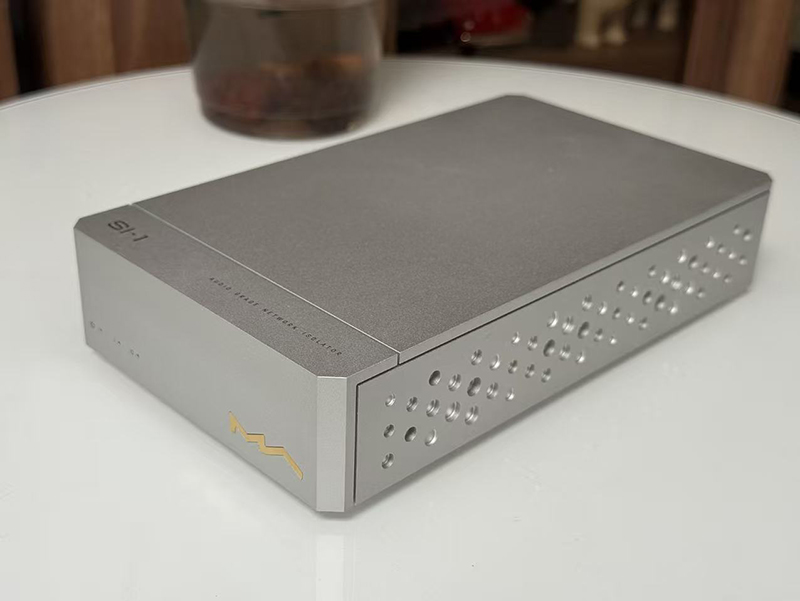
Actually, I think something like the SI-1 will likely be built into many streaming devices in the future. But at the same time, it will definitely continue to exist as a separate product. After all, among streaming users, many still prefer using a Mac Mini or NAS as the core, or for those whose DAC's streaming part hasn't been refined to this level, they'll also need this thing.
So, before talking about how it sounds, let's first discuss its principle and the usage scenarios I understand.
How it works
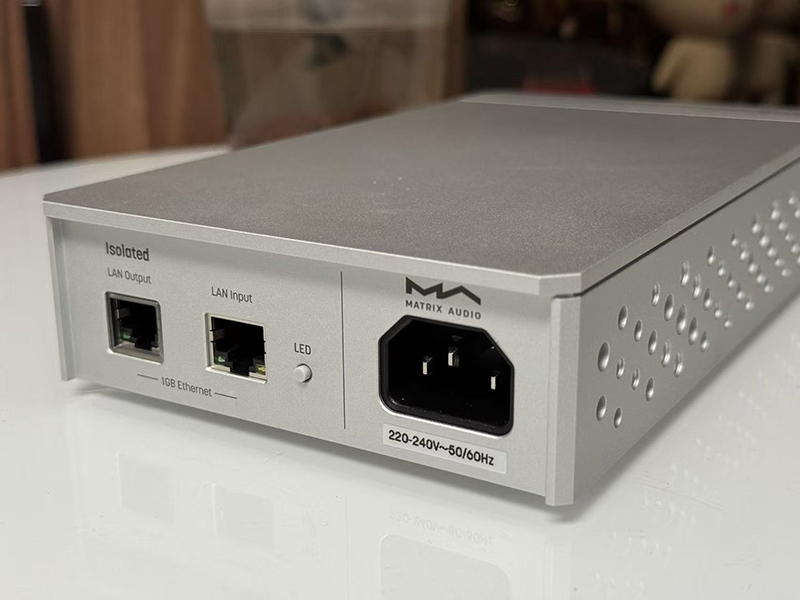
The principle is actually quite simple. It's a network isolation device with Gigabit Ethernet input and Ethernet output about the size of a clay brick, slightly thinner. It has a built-in linear power supply, so you can just plug it into power mains. It has no power switch; just plug it in, then it will on. Internally, it essentially uses an electrical-optical-electrical principle, converting the input electrical signal to optical, exchanging it via optical fiber, and then converting it back to electrical output. This achieves complete isolation from network electrical signal interference. Compared to other products on the market, the SI-1's optical part uses independent signal path for upstream and downstream, which, compared to most similar products on the market that share one optic fiber for both... is indeed more Hi-Fi.
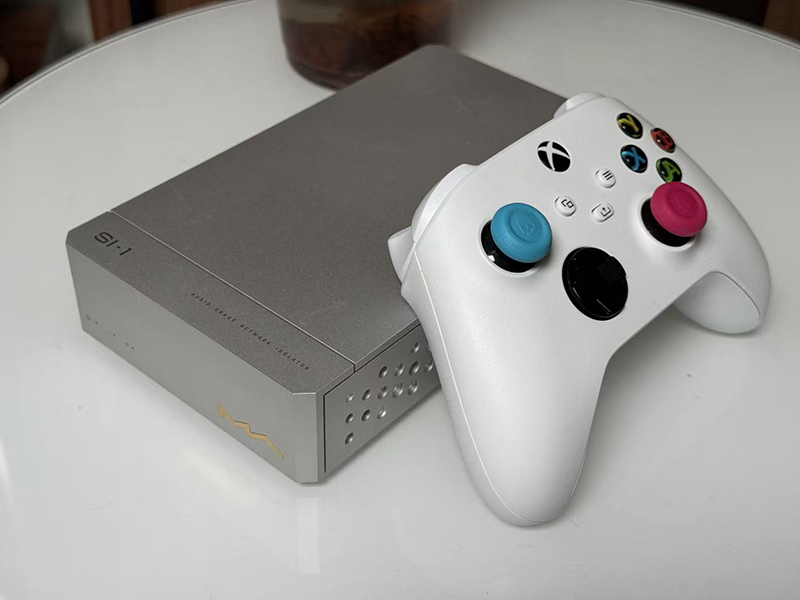
Put a game controller next to it for size comparison.
Using scenarios
Regarding using scenarios, I actually think it's only for two types of users: 1. Users who don't have a Hi-Fi switch. 2. Users for whom one Hi-Fi switch isn't enough but two are overkill.
The first is easy to understand. If you are a streaming user and don't have any network isolation equipment yet, and you want to try it out or bring some improvement to your streaming part through isolation, you can add this device for your core or network bridge (DACs with network ports can temporarily count as a bridge).
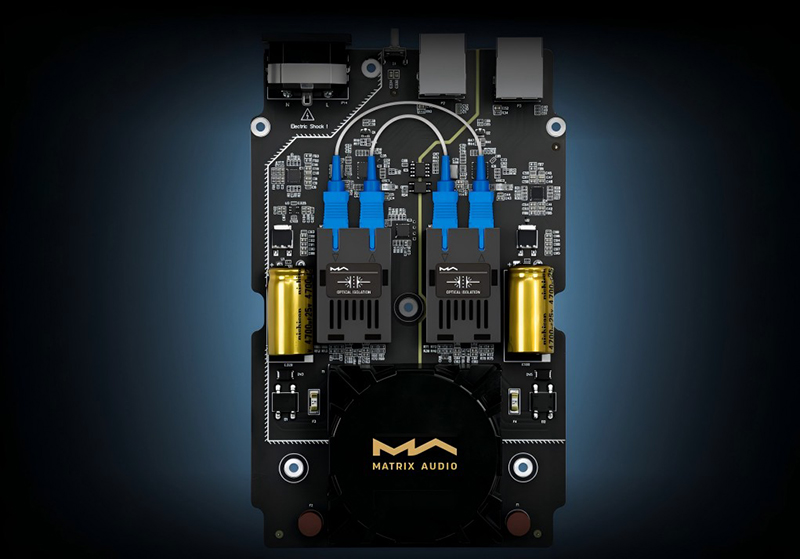
Independent upstream/downstream optical modules.
The second type is actually users like me. As a user of the 「Matrix Audio」SS-1 Pro , in terms of effectiveness for a single device + my previous tinkering with optical isolation, just one SI-1 isn't as effective as the previous setup. But I still need an SI-1 because in my entire streaming system, some things are not in the same physical space, meaning they can't be physically connected to the same switch. My core is my QNAP NAS, which is in the living room, while my DAC and other equipment are in my study. So, regarding how to make my network more "Hi-Fi", I could only take care of one end. If I wanted a better network environment for the streaming core, I couldn't take care of the DAC; if I wanted better network for the DAC, I couldn't take care of the core. So previously, the SS-1 Pro switch was always in my study doing optical isolation for the DAC, but that was a bit of a waste because, besides the optical input, I was only using a 100Mbps port for the DAC... I really wanted to use its high bandwidth for my dual 2.5G port NAS. I tried, but honestly, with just one switch, in terms of sound improvement, the gains were more obvious when given to the DAC.
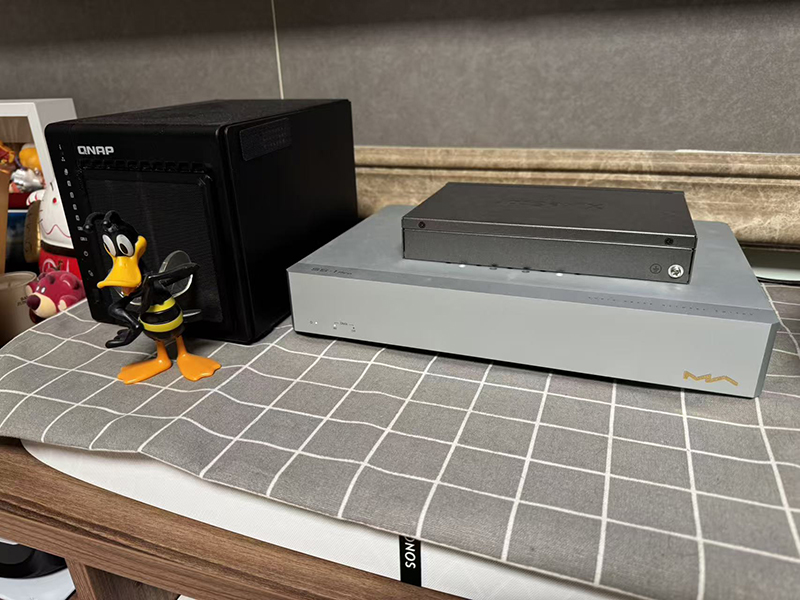
My NAS is finally Hi-Fi too.
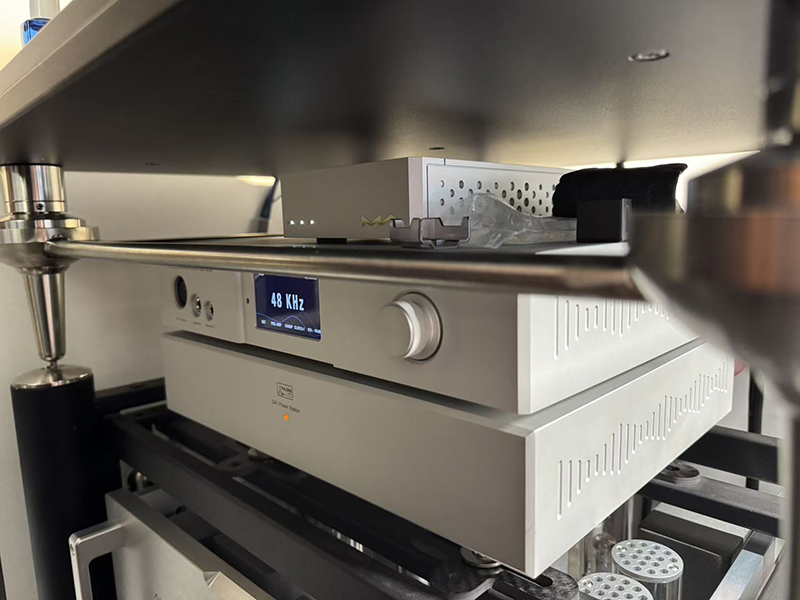
After getting the SI-1, I'm complete. Now I've moved the SS-1 Pro switch to the living room. I have more devices in the living room that need wired network, paired with another consumer-grade switch for optical isolation. The NAS can also utilize the full bandwidth of its dual 2.5G ports and get the network "cleaning" from the SS-1 Pro (I'm still researching if I can get the QNAP system to assign a dedicated network port for ROON to connect to the SS-1 Pro's 100Mbps port, haven't succeeded yet). The SI-1 is placed in my study. Space on the equipment rack is limited, so I just put it on top of my DAC. Also, all my devices are plugged into my PS regenerative power supply. I'm lazy, and this thing can remotely switch on/off all equipment plugged into it with one button. So now it can "live and die together" with my DAC in terms of power—when the DAC is off, it's off too. My OCD is satisfied to the extreme.
User experience and sound performance
Comparison with advanced solutions
Finally, regarding the sound performance of the SI-1, I think it's definitely very useful. First, after getting it, I tried all the methods I could think of: using it alone for the DAC, before the SS-1 Pro, after the SS-1 Pro, comparing with using only the SS-1 Pro, etc. Firstly, as mentioned before, in terms of complexity and effectiveness, the result is just like the price: the SS-1 Pro + consumer switch + carefully matched optical module + optic fiber still sounds better. Even connecting the SI-1 in series after this combo, I think there is a change, but there is no significant improvement, so it's not very necessary.
The independent value of SI-1
But if you don't have an SS-1 Pro or a better Hi-Fi switch, then the changes brought by the SI-1 is very obvious. It's very similar in direction to the improvements brought by various kinds of "cleaning" in the digital era. It's a sound without coloration, with a darker background, clearer overall frequency response, and better, cleaner bass extension (the bass might be because I care more about it). And even though my core is just a consumer-grade NAS that I haven't tinkered with the power supply or anything, after I gave the previous SS-1 Pro to it and the DAC got the SI-1, the improvement and difference were quite surprising to me. The harshness and lack of energy in the streaming system were noticeably improved. But indeed, when the core and bridge aren't in the same space, it's quite expensive...
The cost-effectiveness of SI-1 is reflected in its peace of mind
In terms of the difference for the DAC, compared to the hassle and price difference of the SS-1 Pro, I think the SI-1 is clearly a more worthwhile and cost-effective choice. But the premise is if, like me, you can't connect the entire streaming audio system through one switch. If your core is also right next to your DAC, then I'd think a better standard Hi-Fi switch like the SS-1 Pro is a more worthwhile choice to tinker with.
Epilogue
Finally, a few more complaints and random thoughts:
I think almost the only drawback is that this machine is only Gigabit. It would be even better if it were 2.5G. I think giving it to the core and the more complex but better SS-1 Pro combo to the DAC would yield higher returns. But as someone with network speed benchmark OCD, I can't accept my NAS not running at full 2.5G, so I haven't tried nor will I use it the other way around. If the SI-1 had 2.5G bandwidth, it would be perfect.
Observation of 「Matrix Audio」
The evolution of 「Matrix Audio」over the years is actually quite interesting to me. From a DIY workshop to a famous brand, to a streaming DAC manufacturer, to a full-category manufacturer except speakers. But actually, what they've been doing isn't just "major components." After all, major components like streamers and DACs often require "luck" because recognition of their sound tuning is a matter of taste. But many fine accessories have become another breakthrough. Actually, 「Matrix Audio」has always had this gene. They made digital interfaces, even a PCIe USB extension card back in the PC-Hi-Fi era. And in today's streaming era, with switches, isolators and clocks, combined with the brand's progress, they have better product completion, design, and functionality. Now, the "accessory" product line of 「Matrix Audio」won't be something only their fans know about, unlike many years ago, right? Thinking about it, if a brand is such that you might not like the function, design, or even tuning of their major components, but you still can't escape paying them money for accessories, isn't that also quite powerful?
Last-minute addition before article release: It's on the market, priced at RMB 3980, cheaper than I imagined.