「Matrix Audio」 SI-1 Audio Grade Network Isolator Review by hpstudio
·Evaluation Basic Information
·Author: Huang Peng (hpstudio)

Huang Peng (hpstudio) is highly influential in the Hi-Fi and professional audio field in China. He combines multiple identities as a senior audiophile, expert, and acoustic designer. He is recognized as a "golden ear" in the audiophile circle. He is not only a developer and strict reviewer of audio products but also a designer of the perfect listening environment. Just as its slogan "Audio is my work, music is my life, hoping to resonate with you" expresses, it does not chase mass traffic but is committed to serving the player community that aims for the highest sound quality. Through rigorous reviews, professional acoustic knowledge, and genuine musical passion, it has become a key platform with important reference value and community influence in this field.
·Original URL: https://mp.weixin.qq.com/s/qjGENQrJCYEC3RBne4nssw
·Evaluation equipment: 「Matrix Audio」 SI-1 Audio Grade Network Isolator
The text is as follows:
More boxes, more problems?
In the audio world, everyone know the principle: "More boxes, more problems." This was a popular saying among audiophiles back in the day, meaning that in Hi-Fi setups, a more complex signal path typically leads to worse sound. Early analog preamps were loaded with additional tone-shaping features. Take my McIntosh C20 preamplifier, for instance:
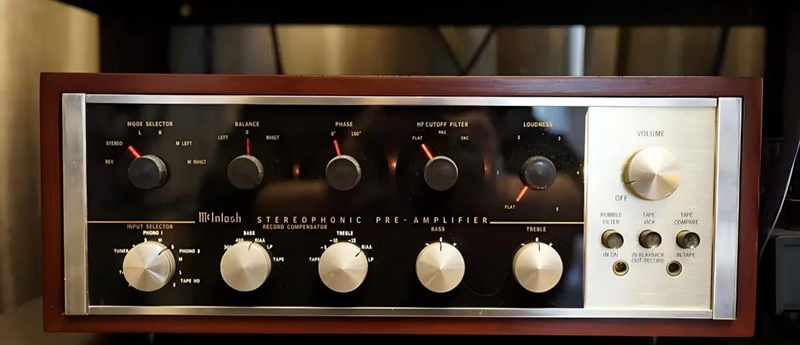
The C20 was McIntosh's first stereo tube preamplifier produced in the late 1950s, with a dizzying array of functions, including left and right channel selection, stereo and mono selection, channel balance, stereo phase adjustment, equal loudness amplitude selection, treble and bass tone adjustment. As for the EQ curve of vinyl records, it is even more complex, so I won't go into details here. Later, in the 1970s and 1980s, transistor amplifiers became popular, marking the entry into the post-analog era. Mark Levinson, who created the minimalist Hi-Fi audio concept, using the best components and the simplest structure to produce expensive audio products, such as my ML-7 preamplifier:
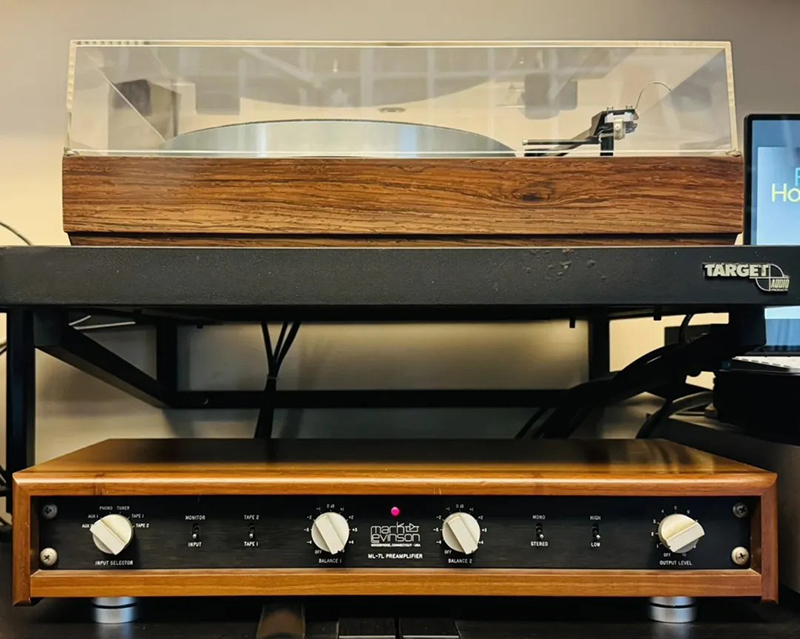

The ML7 uses a separated power supply, featuring a slim 1U chassis. It abandons traditional functions such as tone adjustment, retaining only signal selection, two-channel balance, and volume control, with nothing else. It uses the most advanced components of the time, with input and output adopting military-grade Swiss Fischer connectors. It features modular design, based on the concept of the shortest signal path, was highly sought after in the high-end market at the time, especially in Japan and Hong Kong, where there was the most hot money in Asia at that time. In the 1980s, it was priced as high as 1.8 million Yen, reputedly enough to buy a house. The audio philosophy of this analog era has influenced generations of audiophiles, including myself, of course. I have friends around me who have even adopted passive preamplifiers. I believe that in an environment of analog circuit amplification and transmission, it is indeed true that the fewer functional components there are, the purer and more natural the sound will be.
*The following text is presented for your convenience:
SI-1 Audio Grade Network Isolator, abbreviated as SI-1
SS-1 Pro Audio Grade Network Switch, abbreviated as SS-1 Pro
New Product of 「Matrix Audio 」
In the streaming audio era, does this philosophy still appliable? In 2018, I noticed Roon and TIDAL, and wrote an article ROON & TIDAL Introduction, which had quite an impact in my circle of friends. Many friends started listening to streaming music instead of local playback. I also spent a "huge sum" to purchase the dCS Bartók streamer/DAC and wrote two articles about my adventures Digital Player Adventures - dCS Bartók (Part 1) , & Digital Player Adventures - dCS Bartók (Part 2) . From these two articles, people began to realize that the aspects related to sound quality in the signal transmission process of streaming audio were becoming increasingly complex... In my year-end summary for 2024, I took my streaming audio setup to a new level 2024 Year-End Summary - Digital Edition (Final Solution for Apple Music) . It's not hard to see that things had reached a point of no return. By the end of 2025, a phone call came from Xi'an. It was Tao Yang from 「Matrix Audio」, saying there was an indescribable product for me to listen to. Two days later, I received this package:
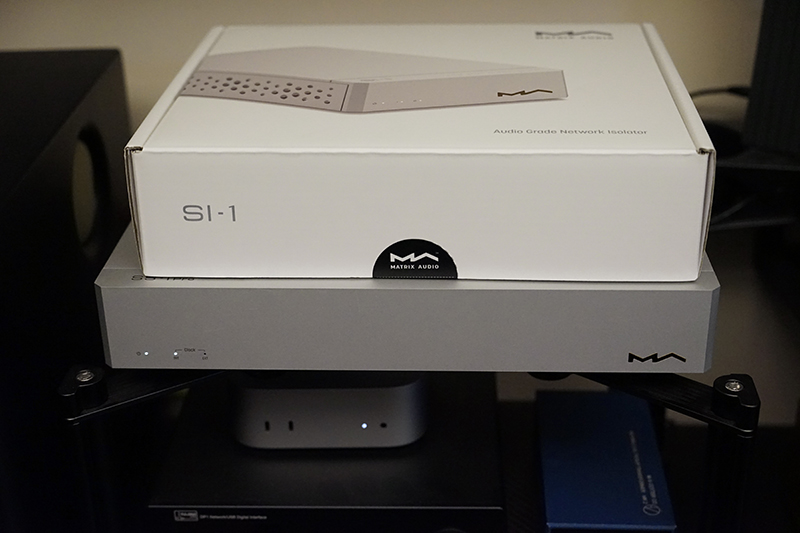
It wasn't very large once unpacked, sharing the same design language of clean, straight-cut edges as the SS-1 Pro:
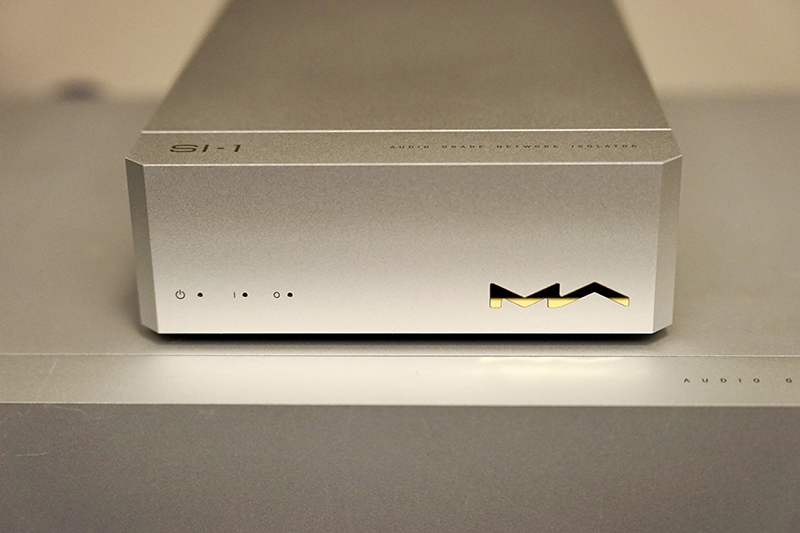
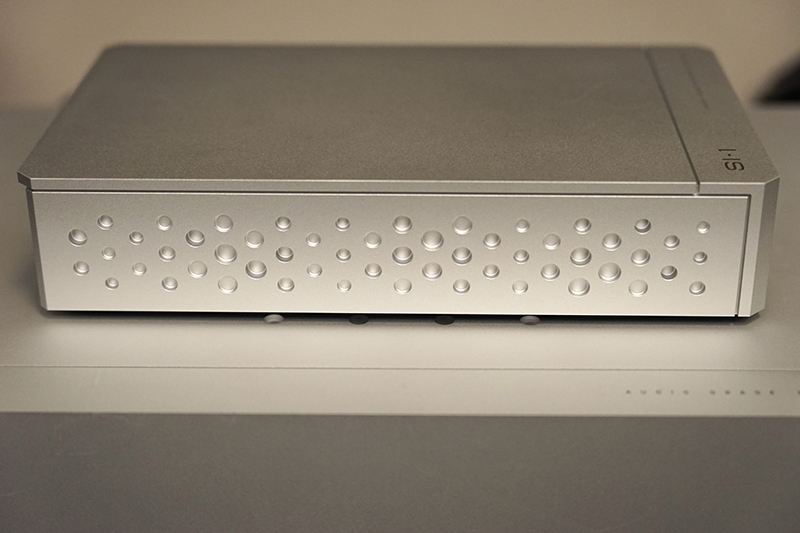
There are also designs similar to heat vents on the side of the device chassis:
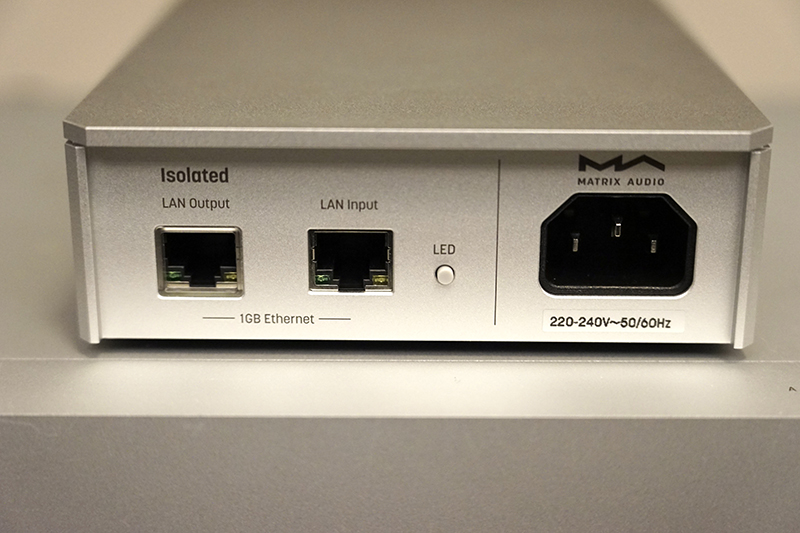
The back panel holds two network ports and a power input—not even a power switch! One network port is labeled "Isolated (LAN Output)," the other is "LAN Input." Clearly, this is a network isolator:
Alright, since it's a network isolator, it should serve to isolate external network interference. You won’t know until you try it — hook it up and let it burn in first.
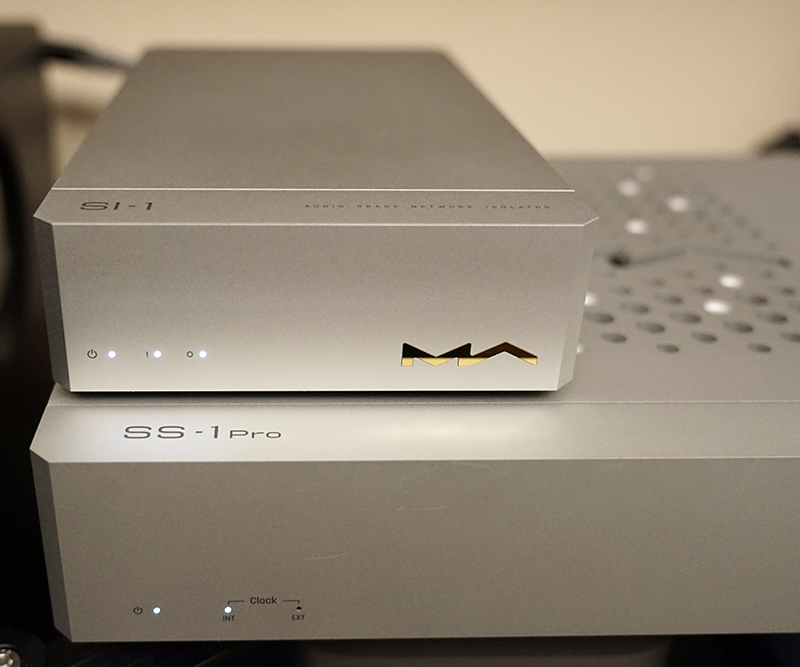
After two days of burn-in, the chassis felt slightly warm to the touch, even a bit warmer than the switch below it. This is likely because the SI-1 lacks dedicated ventilation holes, relying on the chassis for heat dissipation, and also hints at the possible use of a linear power supply inside.
True capabilities are revealed in actual combat
Since Mr. Yang said it's "indescribable", the truth can only be seen through actual combat. My streaming environment is: Huawei optical modem → Tplink router → Huawei S1720 switch → 「Matrix Audio」SS-1 pro (Nas + Macmini Roon core + Jriver Core Gigabit port) → dCS Bartók + Yulong DP-1 (100Mbps port)
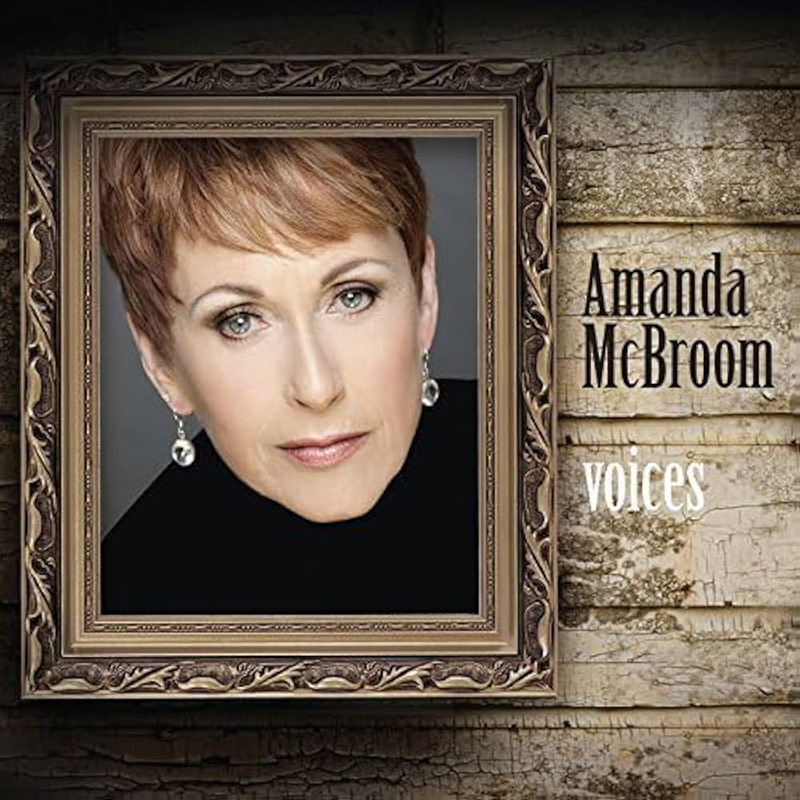
It's dizzying, right? Hahaha. If you're interested in learning more, please check out my article from last year 2024 Annual Summary: Digital Edition (Final Solution for Apple Music). I won't explain further; those who understand will get it. I tested SI-1 from the very end to the very front of the network signal. The test track was from the Tidal, published streaming via Roon to Bartók . The vocal test track was the Amanda McBroom Voices, which has relatively clear vocal sibilance and is used to test the system's high-frequency resolution. Excessive sibilance can easily become harsh. The string and piano accompaniments need to have granularity and sufficient sense of space, making it a relatively difficult album to play:
Another is the Grieg Holberg Suite published in 2025, performed by the Odyssey Orchestra and conducted by Eric Jacobsen, with excellent recording and superb texture of the string section, making it a frequently used piece for me to test symphonic sound fields recently:

Try one by one
(1) Connect to the very end
First, SI-1 is connected between SS-1-Pro and dCS Bartók . So, what's the result? I'm sorry to say that there is improvement, but if we rate the improvement on a scale of 5 points, it's only +0.5 points. Yes, that's all. My mood starts to turn cold🙁
(2) Connected between network switches
How about connecting SI-1 between the Huawei S1720 switch and the SS-1 Pro switch next? It's still only +0.5 points, just like this 🤔? No wonder Mr. Yang said it was indescribable 😂
(3) At the very front of the network chain
One last spot to try: between the Tplink router and the Huawei S1720 switch. Originally, this Huawei switch served as the first stage of isolation. Without it, the sound had a noticeably heavier "digital" character, and Amanda's sibilance sounded somewhat "dirty". That's why this switch has always been the essential bridge between the router and the SS-1 Pro, never removed. How did it fare with the SI-1 inserted here? The improvement was obvious! It was nearly on par with the difference I heard when swapping generic network cables for Audioquest Diamond! The improvement score reached +2.5! Amanda's vocals were clear and transparent in the highs without being piercing, the low-end foundation was rock-solid, and the string section in the Grieg Holberg Suiteexpanded significantly in width. I felt reassured—now the difference was describable.
(4) Attempting Subtraction
This got me curious. Since the SI-1 provides isolation, could I remove the Huawei switch? That is: Tplink router → SI-1 isolator → SS-1 pro switch. What's the result? The upper frequencies remained unchanged—vocals were still clear, transparent, and sibilance was not harsh. The texture of the strings was also good. However, the weight and foundation in the lower frequencies diminished. In other words, the overall sense of solidity and stability wasn't as good as with the first switch in place. The idea of simplifying the chain failed again. 🙁
(5) Connect between the Roon Core computer and the switch
What about connecting it between the Macmini Roon Core and the SS-1 Pro switch? I recall a fellow enthusiast, Baiting, mentioning that the Roon Core needs isolation because, being a computer, it can still introduce network noise. So, I tried connecting it between them. The result? There was a change! While the improvement wasn't as dramatic as between the router and the Huawei switch, the overall detail retrieval improved noticeably. I'm talking about details across the entire frequency spectrum, from highs to lows. Overall rating: +1.5. That raised a question: what about using two units? Three days later...
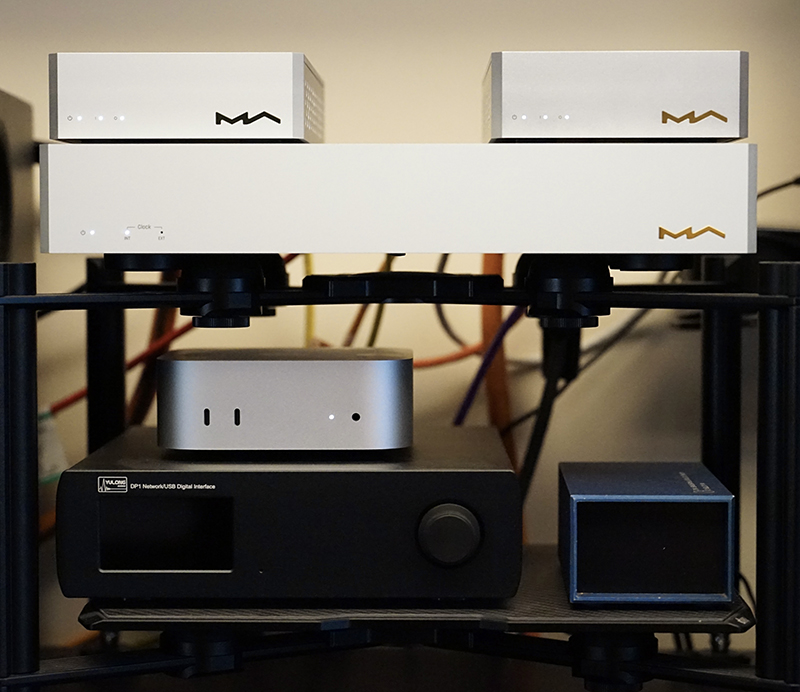
(6) Dual-unit series connection
Yes 😁, I managed to borrow another one 😏. Surely this would be the perfect configuration? Absolutely! It truly was 1+1 > 2. The overall improvement reached +3.5 points! Some might say, "Mr. Huang, did your math teacher also coach P.E.? Connecting between routers gave +2.5, connecting to the Roon Core gave +1.5. Shouldn't connecting both yield +4?" Of course not. Those previous scores were incremental gains from independent connections. When both links are optimized, an overall +3.5 is an excellent evaluation.
(7) Directionality Test
Someone might also wonder: does the isolator have a direction? What happens if connected backward? I was just as curious. I tried reversing it between the Roon Core and the switch: SS-1 Pro → SI-1 → Roon Core, compared to Roon Core → SI-1 → SS-1 Pro. The change? The reversed connection lost detail, as if a veil had been placed over the music. The effect was -1 point. A fascinating experiment, indeed.
First Open Up of SI-1
Curiosity got the better of me regarding the SI-1's internals. Surely it wasn't just two Tplink media converters with a linear power supply, right? Well, just do it! 😕
After removing the bottom plate screws, I found an insulating sheet:
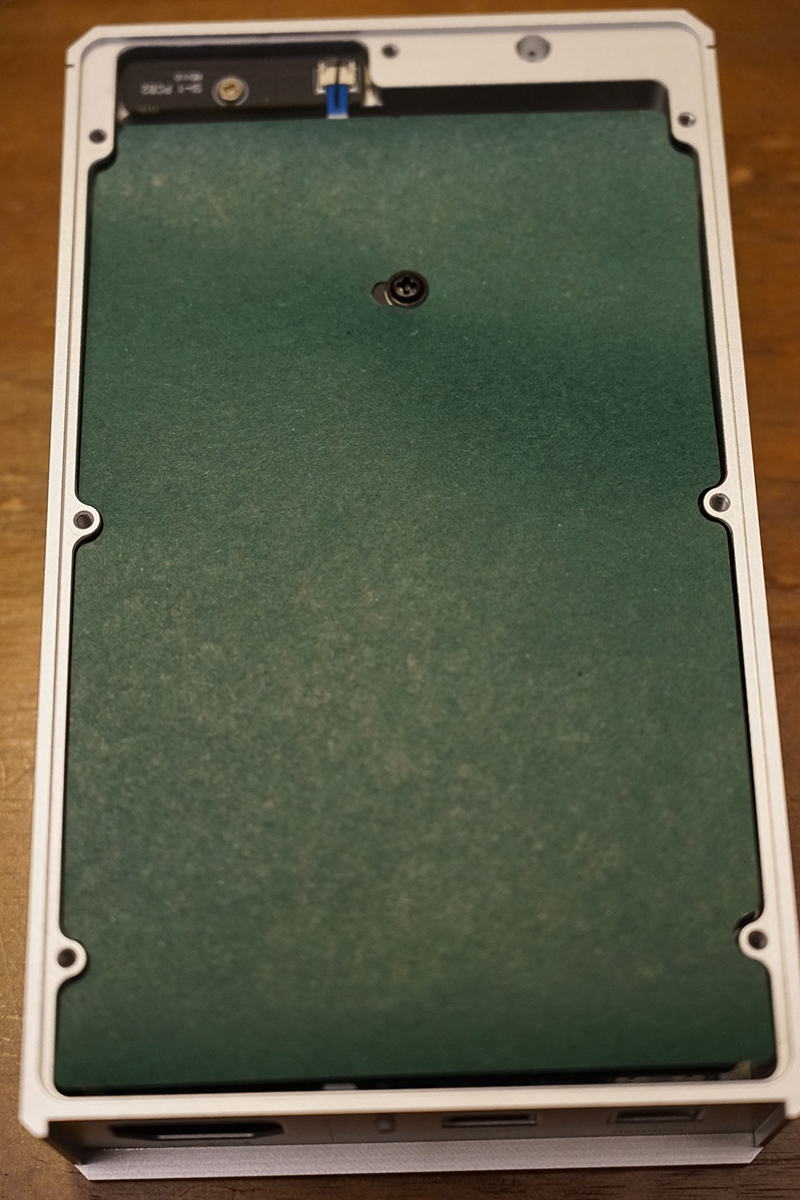
Removing the insulation and flipping the board revealed the full picture. I was relieved—This is not a rebadged or rehoused product, but a design developed from the ground up by 「Matrix Audio」. The linear power supply uses a custom 「Matrix Audio」 transformer and audio-grade capacitors from Nichicon. The layout is clean and orderly. The transformer is placed farthest away to minimize the path to the optical-electrical interfaces—a classic shortest-path design for digital circuits:
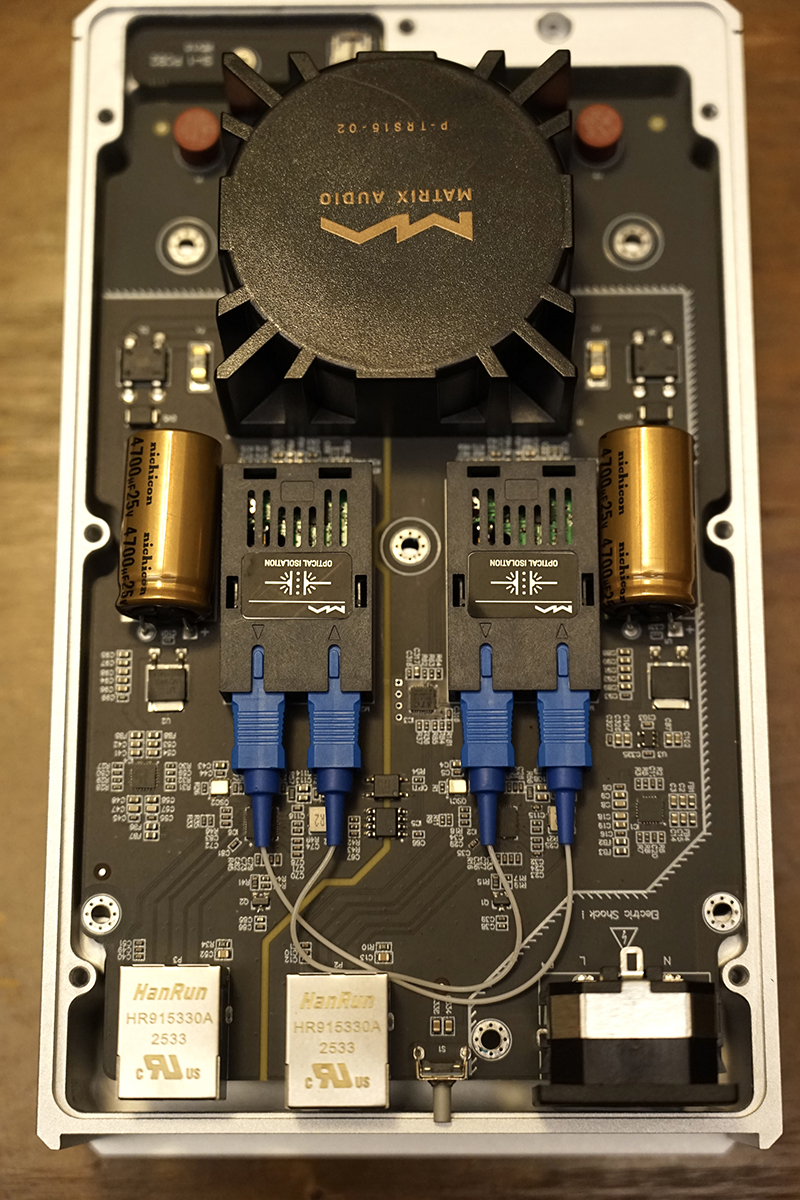
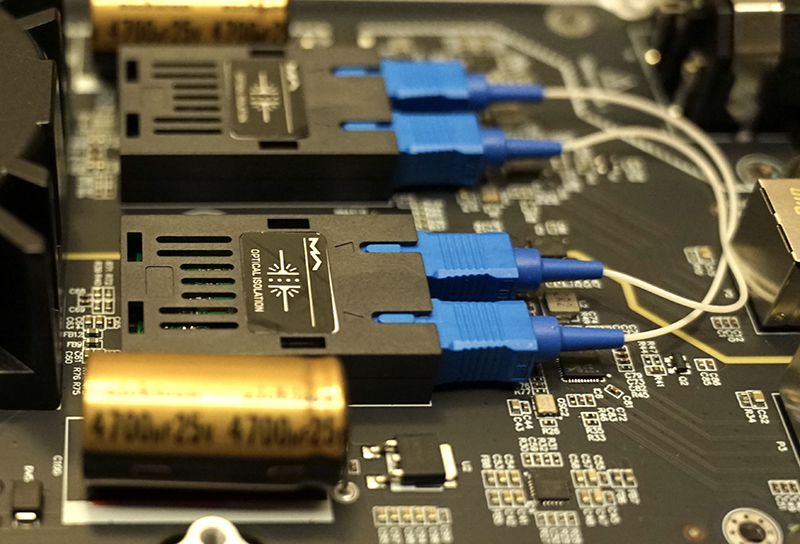
Clearly, this isolator differs from the SFP optical isolation used in the SS-1 Pro. The SI-1 has the optical modules built-in, with only standard RJ45 (copper) ports on the outside. The benefit is that users don't need to fuss with SFP modules. In my experience with the SS-1 Pro, I found that SFP-based isolation doesn't always guarantee sonic improvement, as matching SFP modules with fiber cables requires extensive trial and error, and both significantly impact sound. Choices for these modules are often limited. In contrast, with standard network cables, it's easier to find products that positively influence sound. Perhaps 「Matrix Audio」 recognized this issue and developed the SI-1, implementing the best optical isolation solution with a circuit design more attuned to Hi-Fi needs, using the shortest possible path for the impactful fiber section. I also noted clearly visible 4-pin femtosecond oscillators near the two optical isolators. For more detailed circuit design philosophy, refer to 「Matrix Audio」's official materials:
Epilogue
Time for the final summary. In the world of streaming audio, is it real "More boxes, more problems"? The answer is no. When used correctly, it's more like "More boxes, more benefits". The only thing you need to worry about is buying a few more power cords, and your power strip probably being out of outlets again! 😂
During the Chinese New Year, I also took the SI-1 to a senior audiophile, "Seaside Fisherman" who lives nearby, for a try. He published an article on my WeChat channel CAS Digital Audio Enthusiast Journey 2013-2024. Perhaps because his ATC150 system is larger than the speakers in my study, the improvement effect of the SI-1 at his place was more significant than at mine. The sense of space and overtones were better realized, and the bass also became cleaner and more powerful. My friends gave it high praise, saying that this was the digital audio peripheral product with the most significant improvement they had ever heard. Mission accomplished, it seems 😏.
Thank you for reading this far. If you find this article helpful, remember to like, share, and subscribe! Wishing everyone joyful streaming adventures in 2026! Happy New Year!
(End of full text)