「Matrix Audio」 NA-1 Headphone Amplifier Reviewed by Renowned Hi-Fi Blogger Eddie Hsueh —— Paired With Headphones
·Review Basic Information

·Author: Eddie Hsueh(AKA: Eddie’s HiFi Audio World)
"Semiconductors are work, audio is life." As a seasoned audiophile with a Ph.D. in photonics, Eddie Hsueh has over two decades of audiophile experience and is widely recognized as a KOL, professional reviewer, and content creator in the headphone and audio field. His personal blog, "Eddie’s HiFi Audio World", has amassed over 1.7 million visits, earning high credibility with its rigorous and in-depth reviews. Not only has he collaborated with renowned brands on co-branded products, but he also actively engages with the community across social media, serving as a vital bridge connecting audiophiles and brands.
Original URL: https://eddie0817.wordpress.com/2026/05/01/matrix-audio-na-1-headphone-amplifier-impressions/
Review Product: 「Matrix Audio」NA-1 Headphone Amplifier
The text is as follows:
Listening System Configuration
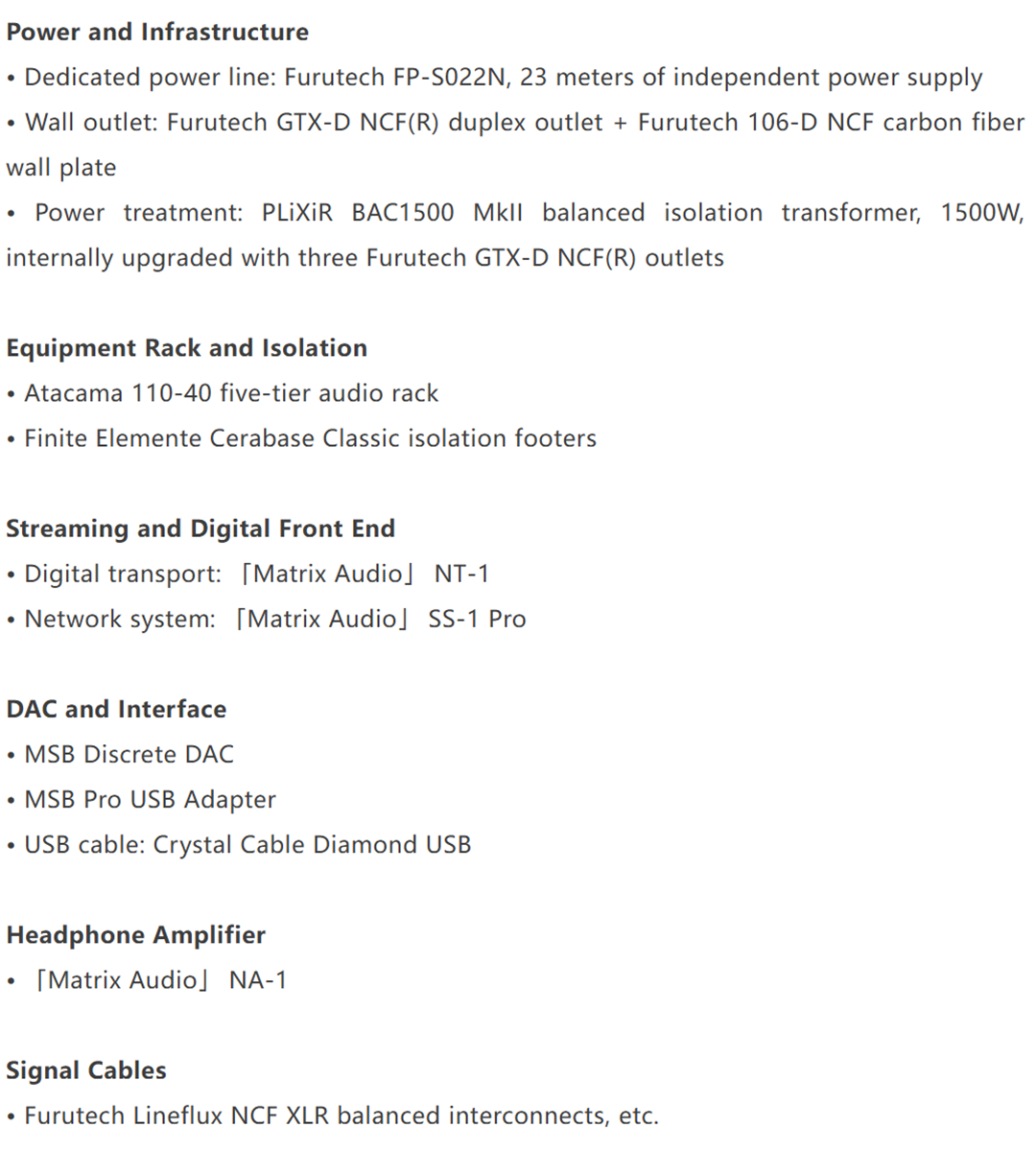
*The following text is presented for your convenience:
N Series Desktop Separates System, abbreviated as N Series
NT-1 Digital Audio Transport, abbreviated as NT-1
ND-1 Audio DAC, abbreviated as ND-1
NA-1 Headphone Amplifier, abbreviated as NA-1
HiFiMAN Susvara

The Susvara has always been one of the headphones that truly tests the capability of a headphone amplifier. It has an impedance of 60Ω and a sensitivity of only around 83dB. On paper, the impedance does not look particularly high, but because its sensitivity is extremely low, what it really needs is not simply “enough volume,” but sufficient current delivery, voltage headroom, and a power supply that remains stable during long listening sessions with large dynamic swings. Many amplifiers can make the Susvara produce sound, but whether they can truly support its bass structure, soundstage scale, midrange density, and dynamic movement is the real question.
With the NA-1 driving the Susvara, I would say this is no longer merely at the level of “it can make sound.” It is able to drive the Susvara with a certain sense of scale and a complete structural foundation. Looking at the NA-1’s balanced output power reserve under low-impedance loads, it does not feel weak when facing the Susvara. In my system, when using Low Gain, turning the volume to around the 12 o’clock position already provides sufficient and reasonable listening volume. The sound does not obviously feel underdriven, compressed into a small space, or lacking bass support.
I also tried High Gain. The volume position was roughly similar, but the overall dynamics became more direct and more impactful. However, at the same time, the upper mids and treble also became more stimulating, with even a slight sense of harshness. My own judgment is that although High Gain makes the sound appear more explosive, on the Susvara it actually reduces linearity and long-term listenability. When the voltage swing becomes too large, the overall sense of control may not necessarily feel more natural. So based on my listening experience, the NA-1 driving the Susvara is actually more listenable, more balanced, and more suitable for long sessions on Low Gain.
With Low Gain and balanced output, the NA-1 can support the Susvara’s bass, and the soundstage does not noticeably collapse. The midrange density also has more body than many high-power headphone amplifiers with a colder or more monitor-like tuning. This actually surprised me a little, because the Susvara is genuinely demanding when it comes to amplification. I have previously used the HeadAmp GS-X Mk2 to drive the Susvara, and apart from not having quite enough volume headroom, the sound also tended to become more stimulating, thinner, and harsher. In comparison, at a suitable listening volume, the NA-1 at least meets my basic ideal requirements for driving the Susvara: it has support, density, and stability, and it does not turn the Susvara into a headphone that only has resolution but no flesh and blood.
Of course, the Susvara has an extremely high ceiling. The NA-1 can drive it well, but that does not mean it has pushed the Susvara to its absolute limit. If you want the looser soundstage, deeper bass weight, more complete stage expansion, and more refined microdynamic layering of a large power amplifier, there are still more extreme and more specialized amplification solutions out there. Based on my own listening experience, amplifiers such as the monster-power-supply PA09M, or large high-end headphone amplifiers like the Cayin Soul-170HA, still perform at a higher level than the NA-1 when it comes to soundstage ease, bass scale, and overall effortlessness with the Susvara.
So my summary would be this: the NA-1 driving the Susvara is surprisingly capable and quite competent. It is not a pairing that merely gets sound out of the headphone, but a desktop amplifier that can give the Susvara a complete framework and a certain sense of scale. However, if we are talking about the true upper limit of the Susvara, the NA-1 is not the final destination. It is more like a headphone amplifier that, within a reasonable size, reasonable price, and desktop usage scenario, can already drive the Susvara to a very listenable and convincing level.
ZMF Caldera

The ZMF Caldera also has an impedance of 60Ω, with a sensitivity of around 95dB/mW. Compared with the Susvara, it is much easier to drive, but it is not a planar headphone that can fully show its potential with just any amplifier. The focus of the Caldera’s sound is not only resolution and speed, but also bass control, midrange density, the resonance character of its wooden cups, and an overall tonal presentation that feels natural, organic, and slightly full-bodied. If the amplifier lacks control, its bass can become loose and the imaging boundaries may not feel sufficiently focused. But if the amplifier is too cold, too hard, or too focused on lines and resolution, it can also weaken the musicality and woody charm that make ZMF headphones so attractive.
With the NA-1 driving the Caldera, I find the overall pairing quite suitable. In my system, around the 10 o’clock position already provides sufficient listening volume, and the driving headroom is clearly much easier than with the Susvara. At this point, the NA-1 does not sound strained, nor does the volume need to be pushed far back in order to support the Caldera’s dynamics and density.
In terms of sonic direction, the Class A thickness of the NA-1 gives the Caldera a more beautiful midrange body. Vocals and instruments sound fuller, and the decay is smoother and more natural. It does not turn the Caldera into a cold, sharp planar headphone that only emphasizes resolution. Instead, it preserves the warm, dense, and woody tonal foundation of the ZMF, while further tightening the bass edges and improving imaging stability. Among solid-state headphone amplifiers, this pairing belongs to the warmer and more musical side, rather than a cold and overly direct monitor-like presentation.
This is especially comfortable in the way vocals and instrumental decays are handled. The NA-1 gives the sound a certain degree of thickness and flow, but without slowing it down to the point of becoming blurry. In this respect, I even find it a slightly better match for the Caldera than the HeadAmp CFA3. The CFA3 has very high technical performance, with excellent resolution, speed, and control. However, because it is so clean, direct, and technically revealing, it can also reduce some of the Caldera’s original organic warmth and wooden resonance. The sound can become a little colder and harder, with less of the relaxed charm and tone that ZMF should have.
Of course, if the goal is purely to bring out the most charming side of the Caldera, I would personally lean more toward pairing it with a good OTL single-ended tube amplifier. A good OTL tube amplifier can bring out the Caldera’s midrange thickness, wooden cup resonance, vocal decay, and airiness with more emotion, along with the kind of attractive coloration many ZMF users enjoy. However, the control, bass tightness, and overall speed of a tube amplifier may not necessarily be better than the NA-1.
So in this case, the NA-1 sits somewhere between those two directions. It is not as calm, fast, and resolution-oriented as the CFA3, nor is it as rich, charming, and obviously tube-flavored as an OTL amplifier. Instead, it achieves a very good balance between the control of a solid-state amplifier and the warm thickness of Class A. For the Caldera, this is a very safe pairing, and one that is also easy to listen to for long sessions.
Fostex TH1100RPmk2

The Fostex TH1100RPmk2 has an impedance of around 32Ω and a sensitivity of approximately 96dB/mW. On paper, it is not an especially difficult headphone to drive. However, with this type of low-impedance planar headphone, the real test for an amplifier is usually not whether it can reach sufficient volume, but whether it has low output impedance, good transient control, proper bass damping, and a stable enough current supply.
With the NA-1, the TH1100RPmk2 already reaches sufficient listening volume at around the 9 o’clock position. Although the TH1100RPmk2 itself is a relatively easy-to-drive planar headphone, this also shows from another angle that the NA-1 has a very generous amount of output headroom. In particular, with the NA-1’s headphone output impedance below 1Ω, together with its considerable balanced output power into a 33Ω load, it does not sound strained when driving a low-impedance planar headphone like the TH1100RPmk2.
In actual listening, the NA-1 makes the TH1100RPmk2 sound more stable. The bass lands more firmly, and the imaging is less likely to become loose or scattered. Many headphone amplifiers can show a common issue when driving planar headphones: on the surface, there may be plenty of resolution and clear outlines, but the sound structure is somewhat thin, and the bass never really stands firmly. It may sound fast, but without enough weight. The NA-1 does not really go in that direction. It gives the TH1100RPmk2 a thicker, more stable, and weightier foundation, so the overall presentation is not only clear, but also better supported.
However, from a pairing and practical-use perspective, the TH1100RPmk2 is not a planar headphone that needs monster-level power to perform well. What it needs is linearity, control, and sonic stability, not simply more and more driving force. If it is paired with an amplifier that has very aggressive power, very fast transients, and a hard sonic foundation, it may instead create a sense of being overdriven—too tight, too bright, and too stimulating. The sound becomes less relaxed, and long-term listenability is affected first.
This is also why I find the NA-1 to be a reasonably suitable match for the TH1100RPmk2. Although the NA-1 has a lot of power, it is not the kind of amplifier that sounds cold, dry, thin, or purely focused on transient impact. The slightly warm, full, and continuous character brought by its pure Class A architecture happens to soften the hard edges and aggressiveness that can sometimes appear with high-power amplifiers. As a result, the TH1100RPmk2 maintains good control without becoming overly tense.
So I would classify this pairing as “acceptable, with good overall sound completeness,” but not necessarily a must-have match where the TH1100RPmk2 specifically needs the NA-1. The TH1100RPmk2 itself is not difficult to drive. The real point is not to drive it too hard, too stiffly, or too brightly. The NA-1’s advantage is that it has sufficient power, while using its relatively warm and full Class A sonic foundation to smooth out the possible aggressiveness of high-power output. Therefore, the overall listening experience remains relatively comfortable, stable, and well controlled.
Beyerdynamic T1 3rd

The Beyerdynamic T1 3rd has been changed to a 32Ω impedance design, with a sensitivity of around 100dB/mW. Compared with the previous 600Ω T1 2nd, the third generation is clearly much easier to drive. For the NA-1, the T1 3rd is not a challenge in terms of power. The real question is how well the amplifier can organize and control its sound.
The sonic direction of the T1 3rd is quite different from the second generation. Compared with the openness, airiness, and treble extension of the high-impedance T1 2nd, the T1 3rd has a warmer and thicker mid-low range, and it is tuned more toward an easygoing and long-term listenable direction. This type of tuning is actually quite pleasant, but it also tests an amplifier’s ability to control the bass and lower midrange. If the amplifier does not have enough control, the T1 3rd can easily sound a little loose in the bass, overly energetic, and not clean enough in its overall outline.
This is somewhat similar to the Fostex TH1100RPmk2. A low-impedance headphone is not necessarily difficult to drive, but if the amplifier does not control the output well, or if its sonic foundation is too hard and too aggressive, the sound can become tense and unnatural. With the NA-1 driving the T1 3rd, around the 9 o’clock position is already enough to reach a sufficient listening volume, so power is not an issue at all. What really matters is that the NA-1 is not simply making the T1 3rd louder; it is making its originally warm and thick foundation sound more stable and better organized.
On the NA-1, the bass of the T1 3rd becomes more controlled, and the landing of each note is clearer. It is not just about having a lot of quantity, but about having more defined rise and fall, layering, and boundaries. The midrange also becomes more solid, with a more complete vocal body, and it is not covered by excessive lower-mid and bass energy. The overall density improves as well, but not to the point where the sound becomes thick and blurred.
I think the pairing between the NA-1 and the T1 3rd is reasonable, because the NA-1 itself has the warm thickness of a pure Class A headphone amplifier, while still offering enough control to prevent the T1 3rd’s warm tuning from becoming loose or uncontrolled. It preserves the T1 3rd’s original smooth and easygoing character, while cleaning up the bass lines and overall sound outline. For this headphone, the value of the NA-1 is not about providing monster-level power, but about making the T1 3rd sound more stable, more orderly, and more like a more complete low-impedance dynamic headphone.
That said, the T1 3rd still retains its inherent character. It still sounds somewhat warm and slightly soft in nature, especially after listening to the Fostex TH1100RPmk2, as the two headphones clearly follow very different directions. Personally, I do not think low-impedance headphones are necessarily the most ideal match for the NA-1.
Beyerdynamic T1 2nd

The Beyerdynamic T1 2nd is a 600Ω high-impedance dynamic headphone, with a sensitivity of around 102dB/mW. The amplification requirements of this type of headphone are completely different from those of low-impedance planar or low-impedance dynamic headphones. It does not necessarily need extremely high current output, but it does need sufficient voltage swing, clean and stable high gain, and a sonic foundation that is not too thin, too cold, or too hard.
Many amplifiers can drive the T1 2nd to a loud volume, but that does not necessarily mean they are driving it well. A common issue is that the treble becomes sharp, the midrange becomes dry, and the soundstage may seem open, but in reality it is just brightness pushing forward, without stable imaging or natural layering. In that situation, the T1 2nd loses the airiness, elegance, and effortless quality that high-impedance dynamic headphones should have.
With the NA-1 driving the T1 2nd, I find this to be a very suitable pairing. The NA-1’s balanced output is still rated at 2.3W into 600Ω, which means it has plenty of voltage headroom for high-impedance headphones. In actual use, the volume only needs to be around the 10 to 11 o’clock position to reach sufficient listening levels, which actually surprised me a little. For 32Ω low-impedance dynamic or planar headphones, around 9 o’clock is already enough, while the 600Ω T1 2nd only needs around 10–11 o’clock. This shows that with most common headphone specifications, the NA-1 can basically reach a reasonable listening volume between 9 and 11 o’clock. Only low-sensitivity planar headphones such as the Susvara need to be turned to around 12 o’clock.
On the NA-1, the T1 2nd sounds more relaxed and composed. Its airiness, layering, and sense of openness are well preserved, but the sound does not become merely bright. The pure Class A thickness of the NA-1 slightly fills in the midrange, which can sometimes sound a little lean on Beyerdynamic high-impedance dynamic headphones. As a result, vocals and strings do not sound overly cold. Overall, the T1 2nd still retains its original upper-mid and treble brilliance, transparency, and airy character, but the NA-1 polishes it slightly, making it smoother, rounder, and more listenable.
With large-scale dynamic music, the NA-1’s control is also better than I expected. It does not make the T1 2nd sound scattered during complex arrangements or high-volume passages, nor does it create the impression that the sound cannot keep up, the bass becomes loose, or the treble pushes forward too aggressively. The overall rhythm, imaging stability, and dynamic movement are all maintained quite well.
So when looking specifically at the T1 2nd pairing, I would say the NA-1 is a very suitable amplifier for it. It provides the voltage headroom and control that high-impedance dynamic headphones need, while using its slightly warm, full, and continuous Class A sonic foundation to smooth out the T1 2nd’s naturally brighter and more elegant character. This pairing does not turn the T1 2nd into a completely different headphone. Instead, it makes its original strengths easier to enjoy. For me, this is quite a good match.
Sennheiser HD820

The Sennheiser HD820, like the HD800S, has an impedance of 300Ω and a sensitivity of around 103dB/1V. However, the sonic characters of these two headphones are actually quite different. The HD800S places more emphasis on the wide, transparent, and airy soundstage presentation of an open-back headphone. The HD820, due to its closed-back structure, focuses more on density, a sense of enclosure, and the unique spatial presentation of a closed-back design.
The HD820 actually has very good detail retrieval and resolution. With certain recordings, it can even make you feel that the amount of information is greater than expected. However, its soundstage is not as expansive, transparent, and open as the HD800S. Instead, it presents a stage with clearer boundaries and a stronger sense of enclosure. In contrast, its mid-low frequency weight is more obvious, and vocals and instruments also have more density.
With the NA-1 driving the HD820, around the 9 to 10 o’clock position already provides sufficient listening volume, which is a very reasonable volume position. In terms of driving ability, the NA-1 has no difficulty with the HD820 at all. The more important question is whether their sonic directions match.
I would say the NA-1 and HD820 make a suitable pairing, but it depends on what kind of presentation the listener prefers. The thickness, stability, and pure Class A foundation of the NA-1 make the HD820 sound more mature and more complete. In particular, it adds nicely to the mid-low frequency density, vocal body, and overall stability of the sound. At the same time, the NA-1 does not make the HD820 overly thick or dark. It still preserves the HD820’s upper-mid and treble transparency and detail, while smoothing the overall edges so the sound does not become overly sharp.
The HD820 itself is not an extremely cold or bright headphone, but it is also not as obviously rich as some thick-sounding closed-back headphones. Compared with the HD800S, the HD820 has higher sound density and greater bass weight, but its sense of openness and air extension are more restrained. The NA-1 happens to give its mid-low frequency foundation more stability, while also making the vocal image more complete and giving the overall sound a stronger sense of musicality.
So if you want to correct the HD820 toward a very monitor-like, neutral, calm, or even colder and brighter direction, the NA-1 is not the most suitable answer. It will not turn the HD820 into an extremely transparent, extremely analytical, completely uncolored monitoring headphone. But if you want the HD820 to sound fuller, more stable, and more complete, with better vocal body, stronger mid-low frequency support, and enough upper-mid and treble transparency at the same time, then the NA-1 is a very reasonable and quite listenable pairing.
Overall, the NA-1 does not drive the HD820 by forcibly opening up its soundstage. Instead, it makes the closed-back stage more stable and denser, while allowing the vocal edges and treble air to unfold naturally without becoming aggressive. This pairing will not turn the HD820 into an HD800S, but it does make the HD820’s own character sound more mature and easier to listen to over long sessions.
HEDDphone D1

The HEDDphone D1 is an open-back full-size headphone with an impedance of 32Ω and a sensitivity of around 100dB. Based on the specifications, it is not a particularly difficult headphone to drive. Therefore, for the NA-1, the available driving power is actually more than enough for the D1. The real point of this pairing is not whether the NA-1 can drive it, but whether the volume control is refined enough, and whether the sound can still remain natural, relaxed, and linear at a suitable listening level.
Basically, the HEDDphone D1 faces a similar situation on the NA-1 as other headphones around 32Ω, such as the Beyerdynamic T1 3rd and Fostex TH1100RPmk2. The NA-1 has more than enough power, perhaps even a little too much. When the headphone itself does not require a large amount of power, using the balanced output directly can certainly bring better separation, a more stable background, and stronger dynamic tension. However, it can also shorten the usable volume range. Within a normal listening level, the sound can sometimes feel slightly forward or energetic, with a little less sense of complete relaxation.
My own D1 was listened to directly with a balanced cable on the NA-1. Overall, the NA-1 brings a darker background, more stable imaging, and a fuller midrange. The D1 itself is relatively neutral in tone. It is not the kind of headphone with a particularly thick, warm, or strongly colored character. If paired with an amplifier that is too thin, too cold, or too focused on outlines, the sound may be clean, but it can also lack some body and musicality. The pure Class A foundation of the NA-1 happens to make the D1 sound a little more complete, especially in vocal body, instrumental density, and midrange continuity.
However, because the HEDDphone D1 does not require a large amount of driving power, volume range and gain selection still need to be considered when using it with the NA-1. If using the balanced output, I would recommend starting with Low Gain, so the volume knob has a more usable adjustment range. If you usually listen at low volume, or if you feel the sound is slightly too forward through the balanced output, you can also try the 6.35mm single-ended output. It may sound more relaxed, and the volume control may also feel more refined.
So I would classify the pairing of the NA-1 and HEDDphone D1 as “sonically compatible, but with slightly excessive driving power.” The NA-1 can make the D1’s midrange fuller, the background cleaner, and the imaging more stable, but the D1 is not a headphone that really depends on a high-power amplifier. The key to making this pairing sound good is not to push the volume higher, but to find the right balance between the NA-1’s thickness and the D1’s neutral foundation under Low Gain and a reasonable listening level.
Unique Melody Umbral

The Unique Melody Umbral has an impedance of 65Ω and a sensitivity of only 84dB/mW, making it a very difficult headphone to drive. Based on actual listening, it even requires more volume and driving headroom than the Susvara. On the NA-1, I needed to turn the volume to around the 1 o’clock position to reach a sufficient and more ideal listening level. This also shows that the Umbral is not the kind of headphone whose driving difficulty can be judged by impedance alone. The real challenge lies in its low sensitivity, as well as the current, voltage, and stable power supply demands of its large planar driver.
When pairing the Umbral with the NA-1, I would still recommend starting with Low Gain. Although the Umbral is difficult to drive, the NA-1 still has enough headroom in Low Gain; it is just that the volume position needs to be pushed noticeably further than with other headphones. If you feel that the volume needs to be turned too far on Low Gain, or if large-scale dynamic music does not feel fully opened up in terms of scale, impact, and stage tension, then switching to High Gain would be more reasonable.
I do not recommend starting directly with High Gain. The main reason is that the Umbral’s MEMS high-frequency driver is inherently very fast, with strong detail retrieval and very obvious transient response. If High Gain is used from the beginning, pushing the voltage swing and transient impact too hard, the sound may become too direct and too bright, and the upper-mid and treble edges may become slightly stimulating. The NA-1’s Class A sonic foundation has a bit of thickness and warmth, which is actually beneficial for the Umbral, because it helps preserve the speed, resolution, and detail of the MEMS treble while giving the midrange and low-frequency planar driver more stable weight.
In terms of sonic pairing, the advantage of the NA-1 with the Umbral is quite clear. The core of the Umbral is that its large planar driver handles scale, bass quantity, and midrange density, while the MEMS driver is responsible for fast response and high-frequency detail. With this kind of hybrid architecture, if the amplifier is too cold, too hard, or too focused on resolution, the treble information can become very strong, but the mid-low range may lack enough thickness. The result can become “very clear, but not fleshy enough.” The NA-1 does not really go in that direction. It makes the midrange fuller, the edges of the imaging smoother, and the bass more stable in its landing. For a high-resolution, low-sensitivity planar hybrid headphone like the Umbral, the NA-1 is easier to balance and more listenable than an amplifier that simply pursues cold and hard speed.
However, the Umbral’s low sensitivity also means it is not very suitable to be driven casually from the NA-1’s single-ended output. Although the NA-1’s single-ended output is not weak by itself, the balanced output is more reasonable for a low-sensitivity large planar design like the Umbral. The point of this pairing is not to make the Umbral simply play loudly, but to give its large planar driver enough air movement, bass support, and soundstage scale, while using the NA-1’s slightly warm, stable, and full Class A sonic foundation to balance the speed and treble detail brought by the MEMS driver.
When properly adjusted, the Umbral on the NA-1 can sound open, detailed, and large in scale, without becoming overly sharp. The bass does not become loose, the midrange still has a certain density, and the treble detail remains clear and extended. That said, to be honest, this pairing can still sound slightly stimulating at times, especially with brighter recordings or tracks that contain more treble information, where the presence of the MEMS driver is still more obvious.
Based on my own experience with the Umbral, I still ultimately prefer pairing it with a tube headphone amplifier, such as the Cayin Soul-170HA, which sounds more relaxed, thicker, and better at softening the treble edges. Of course, with something like my PA09, which has more extreme power supply capacity and control while not sounding hard, this issue does not really exist. The NA-1 can absolutely drive the Umbral, and the result is not bad at all. But if the goal is to make the Umbral sound truly relaxed, spacious, full-bodied, and non-fatiguing, I would say it is still better suited to a higher-end amplifier or tube system with a thicker and more effortless sonic foundation.
IEM: final A10000 CL

The final A10000 CL is the kind of flagship single dynamic driver IEM with an impedance of around 13Ω and a sensitivity of around 99dB/mW. It belongs to the low-impedance, medium-to-high sensitivity IEM category. With the output capability of the NA-1, this is not a load challenge at all. The real issues are volume control, gain selection, noise floor performance, usable volume range, and left-right channel balance at very low volume levels.
In actual pairing, I used the NA-1’s 4.4mm balanced output for listening. Around the 8 to 9 o’clock position was already enough to provide sufficient volume. This also means that the A10000 CL is actually very easy for the NA-1 to drive. What really needs attention is that the usable range of the volume knob is not very long. Since the NA-1 uses a traditional analog potentiometer, it may naturally be more prone to slight left-right channel imbalance at extremely low volume levels. Therefore, when pairing it with IEMs, Low Gain should definitely be used first, and the volume should be adjusted carefully.
What surprised me more was that after connecting the A10000 CL to the NA-1, I could barely hear any noise floor. For a high-power, pure Class A, fully balanced desktop headphone amplifier, this is actually quite impressive. Of course, the A10000 CL is not considered an especially easy-to-drive IEM, and its sensitivity is not extremely high, so it can still maintain a certain degree of usability with the NA-1. If it were replaced by a higher-sensitivity and much easier-to-drive IEM, such as the Vision Ears VE10, then the NA-1 would not be very suitable. It is not that the tone would be bad, but rather that such a powerful amplifier is simply unnecessary, and the volume range and gain control would instead become the main issues.
Sonically, the NA-1 actually pairs quite well with the A10000 CL. It can fully open up the soundstage of the A10000 CL, preventing the sound from being squeezed inside the head or feeling constrained like it sometimes can with smaller portable players. The upper mids and treble are gorgeous and refined, with a touch of the warm coloration from the NA-1’s pure Class A sonic foundation. It does not become overly sharp or thin. The A10000 CL already has excellent detail retrieval and treble texture, while the NA-1 further adds sound density, background stability, and spatial support.
Conclusion
Overall, the strengths of the 「Matrix Audio」 NA-1 are very clear. Its fully discrete, fully balanced, pure Class A architecture, combined with quite generous output power, gives it a strong sense of confidence when driving most full-size headphones. With high-impedance dynamic headphones such as the T1 2nd and HD820, it provides sufficient voltage headroom and sound thickness. With low-impedance planar or low-impedance dynamic headphones, it also has enough control and bass support. Even when facing low-sensitivity headphones such as the Susvara and Unique Melody Umbral, the NA-1 is not merely struggling to make sound. It is already able to support a certain sense of scale, structure, and overall sound completeness.
In terms of sonic direction, the NA-1 is not a cold, bright, sharp, or extremely resolution-focused amplifier. Its foundation is more stable, thicker, and denser, with a bit of the warmth and continuity commonly associated with pure Class A headphone amplifiers. It does not deliberately darken the treble, nor does it color the sound as heavily as a tube amplifier. Instead, it gives the midrange a more complete body, makes the bass land more firmly, and presents imaging edges in a smoother and more rounded way. For headphones such as the ZMF Caldera, Beyerdynamic T1 2nd, and Sennheiser HD820, which need a balance of control, thickness, and long-term listenability, the NA-1 is quite easy to pair well.
However, there are several things to pay attention to. First, the NA-1’s Low Gain is not truly low gain. It works well for many full-size headphones, but with high-sensitivity IEMs or some very easy-to-drive low-impedance headphones, the usable volume range can become quite short. Second, it uses a traditional ALPS four-gang motorized potentiometer. It sounds natural and has good reliability, but at very low volume levels, slight left-right channel imbalance may still occur. This is also why I would not consider it especially suitable for headphones or earphones with very low impedance and high sensitivity. Third, the NA-1 has a lot of power. With certain headphones around 32Ω and with decent sensitivity, the sound can sometimes feel slightly too forward or energetic. Not every headphone needs this much output capability.
For this reason, I think the NA-1 is better suited to full-size headphone users, especially those who own high-impedance dynamic headphones, planar headphones, or headphones that genuinely require more driving power. IEMs such as the final A10000 CL, which are relatively more demanding among earphones, can still be paired with it, and the noise floor performance was better than I expected. But if it is something like the Vision Ears VE10, a high-sensitivity IEM, I would not say the NA-1 is the most suitable choice. It is not because the tone is bad, but because such a powerful amplifier is simply unnecessary in practical use, and the volume range and gain control may instead become limitations.
If we place it back into the 「Matrix Audio」 N Series system, the NA-1 is a very logical piece of the puzzle. It can be placed after the NT-1 and ND-1, and even combined with the SS-1 Pro and SC-1 to form a complete desktop separates system. For users with limited space who do not want to compromise by using an all-in-one machine, this product line is actually quite attractive. The NA-1 is also well suited to users who already own a good DAC or digital transport and simply want a mature-sounding, powerful headphone amplifier that can also serve as a preamplifier.
Of course, it is not the PA09, nor is it the Cayin Soul-170HA. Those larger amplifiers, with more extreme power supplies and greater headroom, still perform better in terms of soundstage ease, bass scale, and overall effortlessness when driving headphones such as the Susvara and Umbral. The NA-1 is not the ultimate answer, and it does not need to be exaggerated into some kind of “flagship killer.” But considering its size, price, design maturity, and actual sonic performance, I would say it is a very solid, mature, and seriously worthwhile pure Class A headphone amplifier.